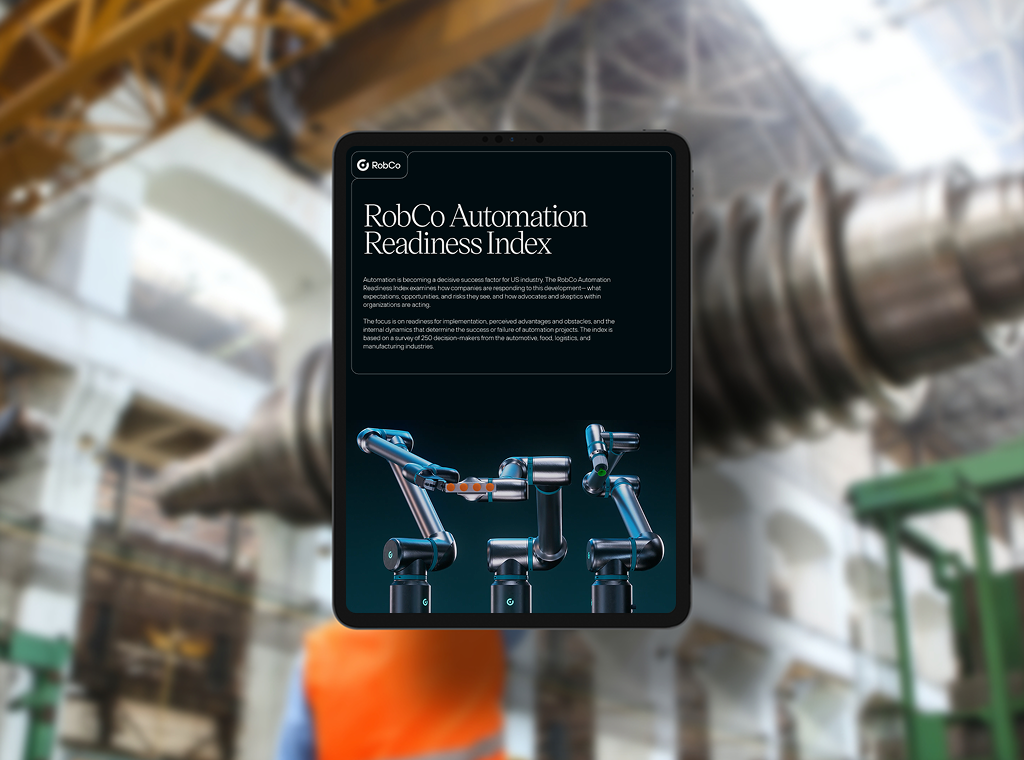
US industry is undergoing a once-in-a-generation transformation. US federal government incentives to boost domestic manufacturing are driving businesses to accelerate their plans to use automated technologies.
The pace of this change gives a strong illustration of the significant benefits of automation, particularly in the industrial space. Automation provides not just a way of increasing business output but also of overcoming industrial labor shortages that could hinder growth plans, with Deloitte forecasting that the US could need 3.8 million more industrial workers by 2033, but 1.9 million of these roles could go unfilled.
But there are also obstacles: The high cost of investing in physical automation equipment like robotics can present significant upfront spend, and a lack of skilled workers who can operate it among the risks holding businesses back.
Our study examines how US industry is preparing for and adapting to this rapidly-evolving shift, the growing importance of process automation and what expectations, risks, and opportunities are associated with it.
The focus of the study is on readiness for implementation, perceived benefits and challenges, and the role of advocates and skeptics within companies.
The analysis is based on a survey of 400 decision-makers from US industrial companies who are responsible for the automation of virtual and machine processes in their companies. Particular focus was placed on the construction, healthcare, and manufacturing industries.
The study shows that there is a clear demand among US businesses for automated technology that’s simple to use, cost-effective, and can be scaled quickly and durably.
Key Findings at a Glance:
- Almost all US industrial businesses (95%) are planning to automate in the next 1-3 years.
- Nearly one-half (48%) cited investment costs as the biggest obstacle to further automation, and 27% a lack of internal know-how.
- 42% see increasing employee satisfaction as a key motive in adopting automation.
- There is interest in new financing models, with 50% saying they would consider leasing and 42% would adopt RaaS (robots-as-a-service) subscriptions.