
Logistics Robots Automation for Palletizing, Pick & Place and Machine Loading
Your autonomous mobile robots move goods across the floor all day. One manual station still sets the pace: depalletizing mixed pallets, picking uneven cartons, feeding a machine by hand. That is the bottleneck warehouse automation now closes. Logistics robots are robotic systems that automate the physical handling inside the warehouse, not just the transport an AMR fleet already covers. They pick what changes, palletize what varies, and load machines without waiting for a person.
Key Takeaways
The logistics industry faces numerous challenges: Labor shortages, increasing demands for sustainability and efficiency, and the pressure to digitalize processes. Innovative automation solutions help overcome these challenges and make logistics processes future-proof.
A logistics robot is not the same as an AMR: mobile robots move goods, while handling robots depalletize, pick, pack, and load machines.
RobCo automates the variable tasks that rigid robots and conveyor systems fail at, using Physical AI that adapts without reprogramming.
Documented palletizing results: up to 80% less manual time, up to 5x more capacity, and ROI from day one.
The rental model means zero upfront investment, which fits seasonal peaks.
Systems connect to your existing warehouse management system and run under recognized safety standards for staff and forklift traffic.
Labor shortages
Skilled staff for repetitive picking and palletizing are hard to hire and keep, and the manual station caps daily throughput.
Sustainability
Mistakes in production increase waste and reduce resource efficiency.
Digitalization
Disconnected manual steps break the data flow and leave the WMS blind to what happens at the handling station.
Cost pressure
Fluctuating transport and operating costs squeeze margins, and overtime during peak times adds costs.
Definition
Logistics Robots Vs. an AMR Fleet: Two Different Jobs
A logistics robot is any robotic system that automates a physical task in the warehouse. Two categories do very different work.
01 · Moves goods
The first category moves goods. These are the mobile robots most operations already run: autonomous mobile robots (AMR) and automated guided vehicles (AGV). Guided by LiDAR and autonomous navigation, they transport loads across the floor. Fleet management software coordinates the fleet, often bringing shelves to a picker in a goods-to-person setup. This layer is mature, and a transport robot handles point-to-point movement reliably.
02 · Handles goods
The second category handles goods. Rather than moving a load, a handling robot manipulates each item individually. It picks, palletizes, packs, and feeds machines, drawing on machine vision and pick-and-place. This is the more demanding task, and the one most warehouses still perform manually.
Most sites already run the movement layer well. The handling layer is where the manual work, and the labor cost, remain. Logistics robots offer more than transport, and closing that handling gap is precisely where RobCo focuses. Our autonomous industrial robot Alfie is one part of that answer.
The Problem
The Limits of Conveyor Systems and Rigid Robots With Mixed Cartons
Traditional automation assumes uniformity. A conveyor system or a fixed robot cell is programmed for one carton size, one pallet pattern, one repeatable motion. Change the product, and the line needs reprogramming or requalification. That is why earlier robotics generations struggled with rainbow pallets and mixed SKUs. Many operators concluded that variable handling simply cannot be automated. The conclusion was right for that technology. It no longer holds for adaptive systems.
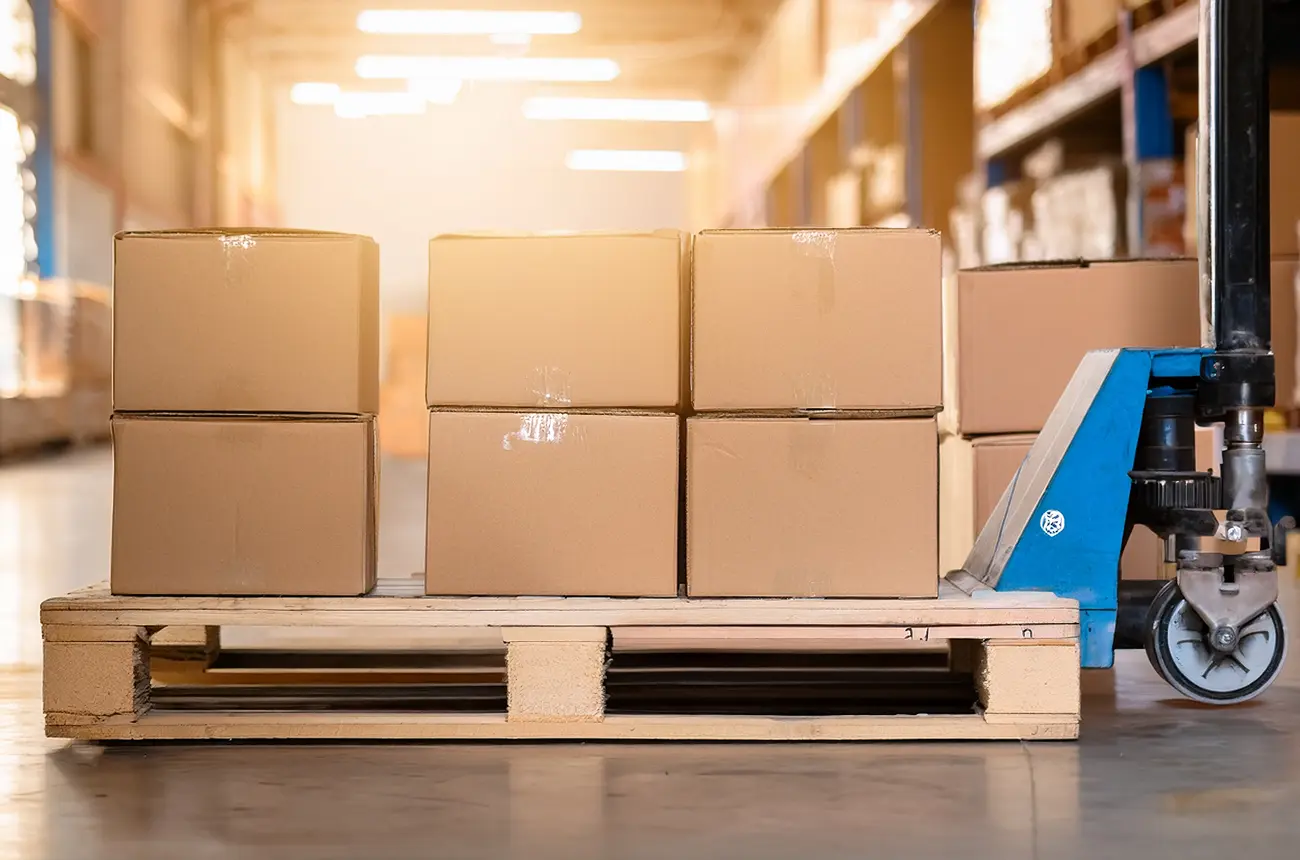
RobCo automates the handling tasks where rigid robotics and conveyors fail. The systems use Physical AI to recognize new items and adapt in real time, so a changed carton does not trigger a reprogramming project. Instead of buying a fixed line, you deploy AI-based modular robots that pick, palletize, pack, and feed machines, and that keep learning during operation. A warehouse robot that adapts to your goods is worth more than one that forces the goods to adapt to it.RobCo’s solution has proven results across numerous industries such as manufacturing, and those results carry over.
RobCo's palletizing automation deployments show it: up to 80% less manual time, up to 5x capacity, and ROI from day one. Precise placement also means fewer goods are damaged in handling. That reduces waste, replacement cost, and the returns that follow.
Example from the field: in one three-shift operation, automating a single manual handling station reduced staffing by three roles, for roughly €145,000 in annual savings.
80%
less manual time
5x
capacity
Day 1
ROI
Use Cases
Robotics in Logistics: Where Warehouse Automation Delivers the Most in Logistics Operations
Warehouse automation pays off wherever a manual station limits throughput. Five areas stand out across 3PL, e-commerce fulfillment, and food & beverage distribution.
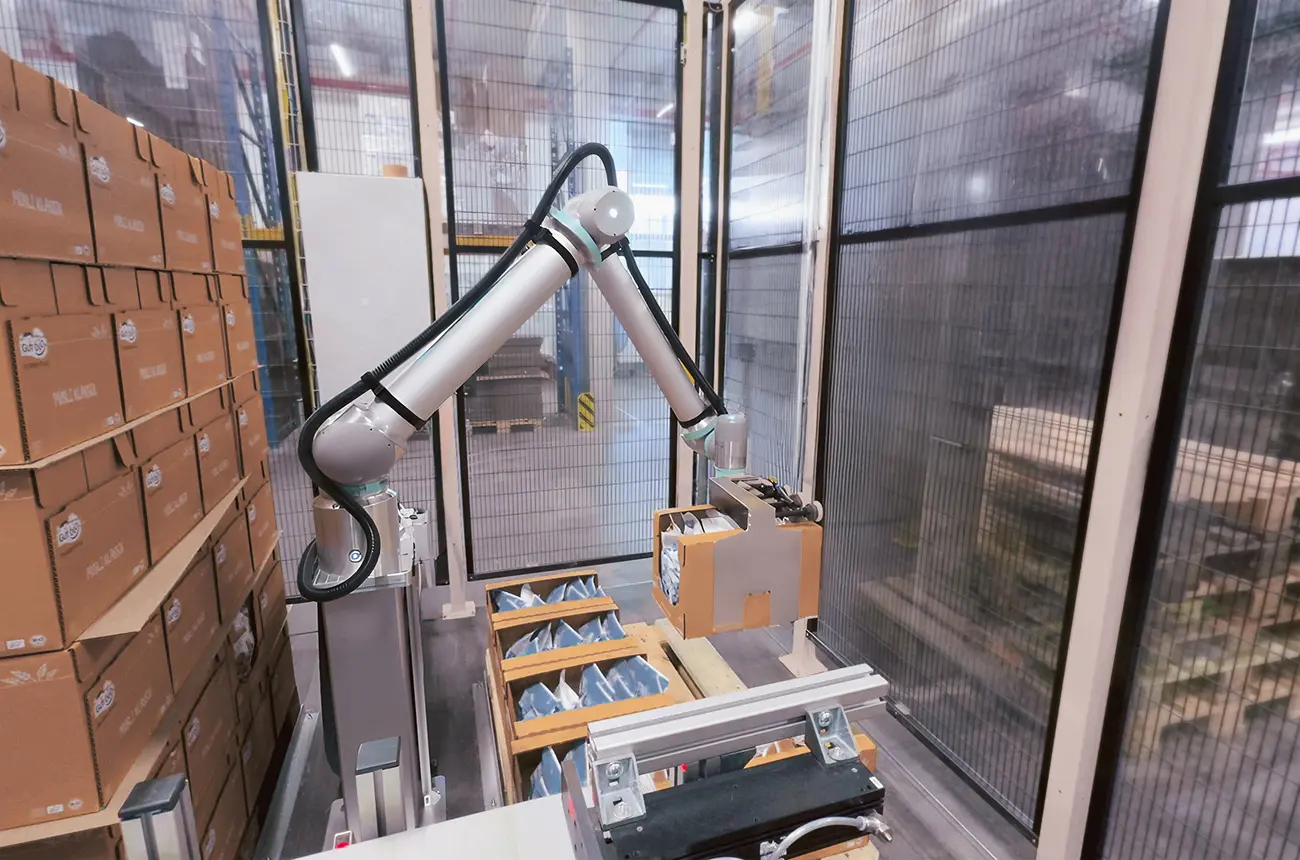
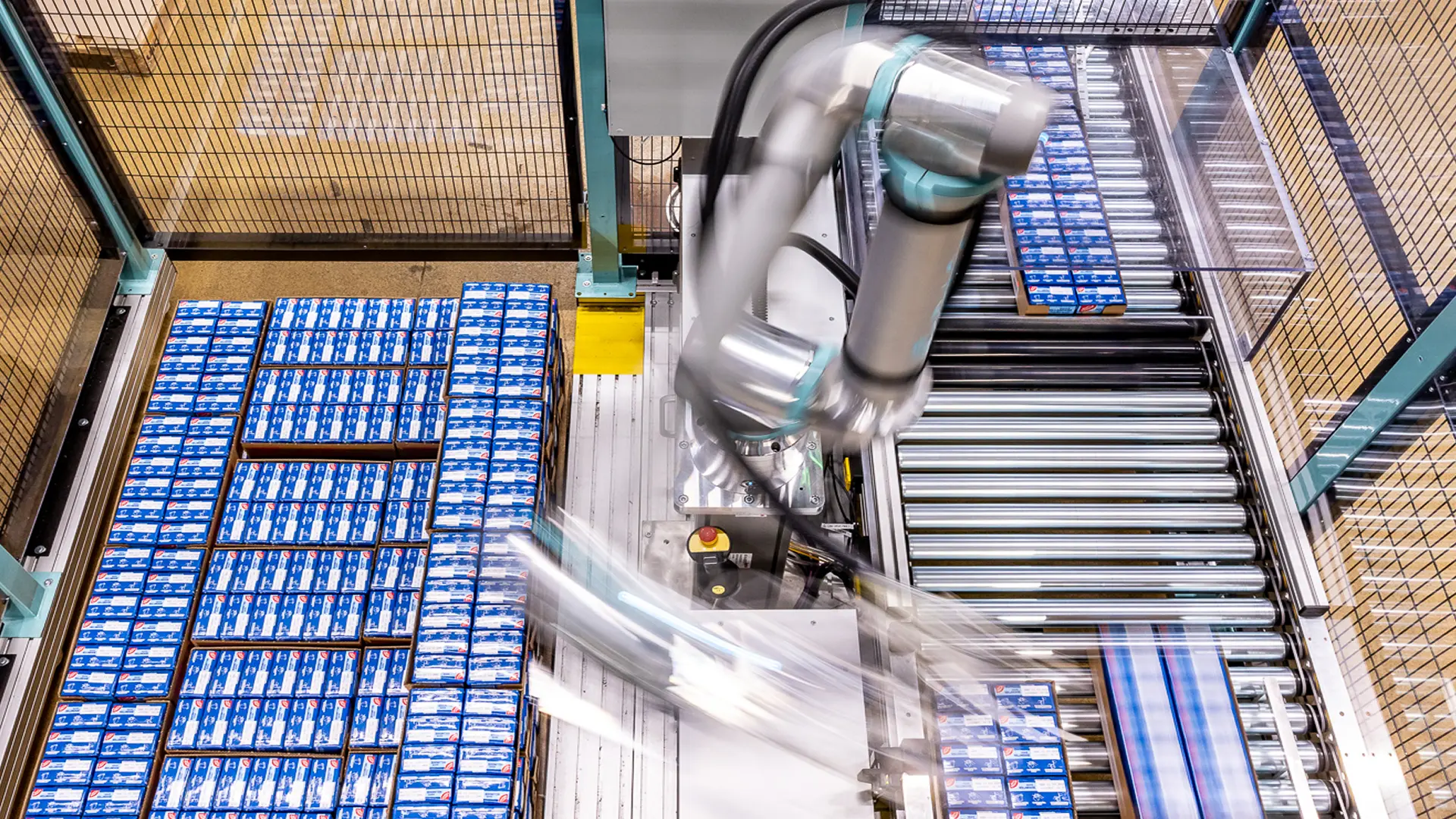
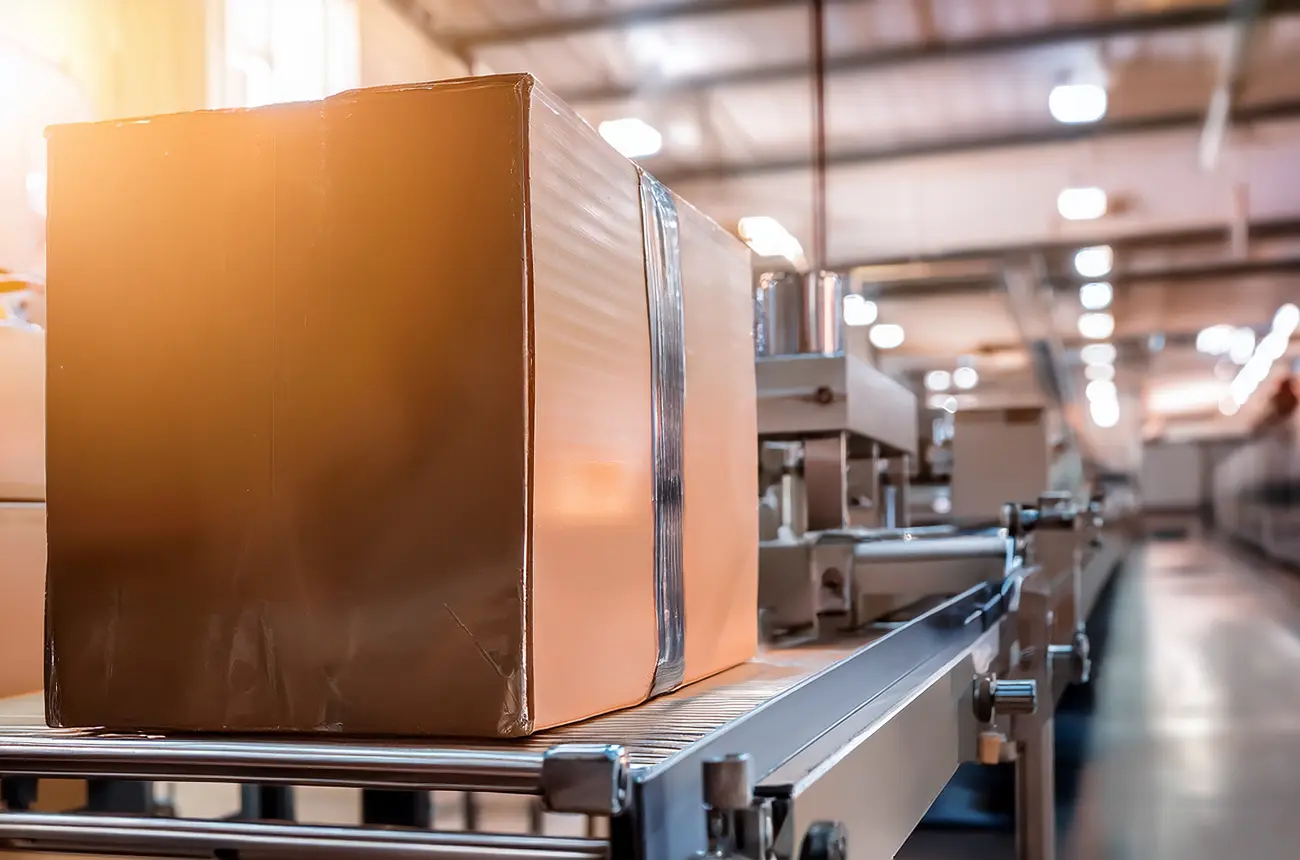
%202.webp)

Integration
Fast Integration With Your Existing WMS
Integration is the step most operators fear after long conveyor or sorter rollouts. RobCo keeps it short.
Works with your existing WMS
The robots connect to your warehouse management system (WMS) instead of replacing it.
Live in under a day
No-code plug-and-produce programming makes a palletizing system operational in less than a day.
Scoped before commitment
Realistic WMS integration time depends on your data interfaces and station complexity, and is mapped in the consultation. Plug-and-produce is a measurable promise, not a slogan.
Robotics-as-a-Service
Modern Logistics: Zero Upfront Cost, Built for Seasonal Peaks
Automation is assumed to mean a large capital project. RobCo's robotics-as-a-service model removes that barrier.
Live in under a day
You rent only the robots you need, at a predictable monthly cost, with ROI from day one.
Built for peaks
Scale capacity up for a peak, then scale back, without owning idle hardware in January.
A steadier supply chain
Fewer manual bottlenecks mean fewer downstream delays across your logistics operations.
This combination of documented numbers, a rental model, and seasonal flexibility is what most transport-focused providers do not offer for handling tasks.
Warehouse automation is no longer only about moving goods. The next step in robotics in logistics is automating the variable handling that used to require people, and doing it without a capital request. Automated logistics works best when transport and handling run together, from the receiving dock through intralogistics to dispatch. That is what makes an automated warehouse resilient and genuinely future-proof, and where logistics automation now delivers the clearest return.
Benefits
Your Benefits of Warehouse Automation at a Glance
Increased productivity
More orders picked and more pallets built per shift, without adding staff. Repetitive tasks are handed over to robots so humans can do the extraordinary work.
Cost reduction
Zero upfront investment and a predictable monthly rate replace a capital project.
Flexibility
Scale robots up for peak season and back down when volumes ease.
Sustainability
Repetitive lifting moves to robots, under recognized safety standards.
Competitiveness
Physical AI adapts to new cartons and SKUs without reprogramming.
Proven in Production
Warehouse Automation in the Real World
Hundreds of RobCo robots are already deployed across Europe and the US - in industries from automotive and electronics to food & beverage and logistics. Customers report higher productivity, more stable processes, and fast ROI thanks to our Robotics-as-a-Service model.











Frequently Asked Questions About Logistics Robots

Logistics robots are robotic systems that automate physical warehouse tasks, from transport to handling. Mobile robots such as AMRs and AGVs move goods, while handling robots pick, depalletize, pack, and load machines. Together they reduce manual work, error rates, and labor cost across logistics operations.
Yes, modern logistics robots are designed to be seamlessly integrated into existing warehouse management and transportation systems. RobCo offers specially developed automation solutions that are characterized by simple integration and intuitive control, so that companies can benefit from the advantages of robotics without costly retrofitting.
Last-mile delivery robots are sold as fleet hardware, but inside a warehouse the machine that cuts labor cost is a logistics robot. RobCo prices these with a rental model: a predictable monthly fee per robot, no upfront purchase, and ROI from day one.
Yes. Modern handling robots use machine vision and Physical AI to recognize mixed cartons, pallets, and changing SKUs in real time. Unlike rigid cells or conveyor systems, they need no reprogramming for each new item. That adaptability is what makes variable picking automation possible today.
Integration connects to your existing warehouse management system rather than replacing it. Our no-code programming and modular hardware make integration fast and simple. The exact WMS integration time depends on your interfaces and is scoped during the consultation.
Yes, when the platform matches the correct safety standard. Stationary cells follow ISO 10218, with ISO/TS 15066 for collaborative operation; mobile platforms follow ANSI/RIA R15.08 and ISO 3691-4. These frameworks govern safe operation next to staff and forklift traffic, in line with OSHA expectations.
Implementing logistics robots increases efficiency, reduces error rates and lowers operating costs. They enable better adaptation to fluctuating market requirements while improving the speed and accuracy of the supply chain. With robots from RobCo, you are ideally equipped for the future and allow workers to focus on more complex tasks.
No, medium-sized companies also benefit from intelligent automation. Modular systems enable flexible solutions for different company sizes. Exploring different types of logistics robots and their applications is now standard for the industry and mid-market manufacturers. RobCo logistics robots can be used in a variety of ways.
Modern robotic systems are designed to operate in dynamic industrial environments. RobCo’s modular robots can be flexibly adapted to changing processes and production requirements. Combined with intelligent software and configurable workflows, they allow companies to adjust automation setups quickly and scale them across lines, applications, and sites.
With modular robots, logistics companies can make their processes more efficient, sustainable, and future-proof.
A short technical review is the fastest way to know whether your station qualifies. RobCo assesses your station, your carton and pallet spectrum, and your WMS interfaces, then models capacity and payback, with no capital request to start.