
Manufacturing Automation: Autonomous Robots Built to Scale
As labor shortages and cost pressure mount, production automation is a survival strategy, not a luxury. Manufacturers face rising competition, tighter margins and hard-to-fill shifts, with reshoring adding to the pressure. Industrial Autonomous Robots increase your production capacities, optimize work processes and reduce operational risk.
Manufacturing Automation At a Glance with RobCo
RobCo's modular robots and AI-powered software run manufacturing processes on their own, from assembly automation to palletizing.
The Robotics-as-a-Service model needs zero upfront investment, so automated manufacturing pays off from the first deployment.
Modular hardware makes flexible manufacturing possible, so one production robot can be reconfigured as your needs change.
Each system integrates with your existing machines, so even brownfield sites can automate with no full production line replacement
Cost & Operational Pressures
High domestic production costs and competitive pressure demand practical solutions to compete with global markets.
Operational Complexity
Automating manual tasks without risking production downtime.
Rapid Scalability
Finding an easy-to-scale technology that adapts to new market demands.
Operational Excellence
Building reliable operating processes and quality assurance that drive success.
Definition
What Manufacturing Automation Means
Manufacturing automation refers to the targeted use of advanced automation technologies such as our modular robot hardware combined with AI-powered software. Together, they make production processes autonomous, efficient and as error-free as possible.
Traditional production automation concentrates on general machine integration. RobCo’s Autonomous Industrial Robotics take a different, end-to-end approach for individual production steps. In practice, it combines robotics, Physical AI, machine vision, the industrial internet of things and manufacturing execution systems (MES). These connect equipment to a single network that shares streams of data and status updates in real time. This is the backbone of smart manufacturing.
The aim is to make processes more flexible, cost-effective and future-proof. Unlike robotic process automation (RPA), which automates digital paperwork, manufacturing automation works on the physical production floor. It is a role-shifter, moving employees from dull, dangerous tasks to tech-driven oversight roles without the need for full production line replacement.
Manufacturing process automation is not all-or-nothing. You can automate a single manufacturing process first, then move from partial automation toward a fully automated production line once the case proves out.
Use Cases
Use Cases for Modular Robots in Production Automation
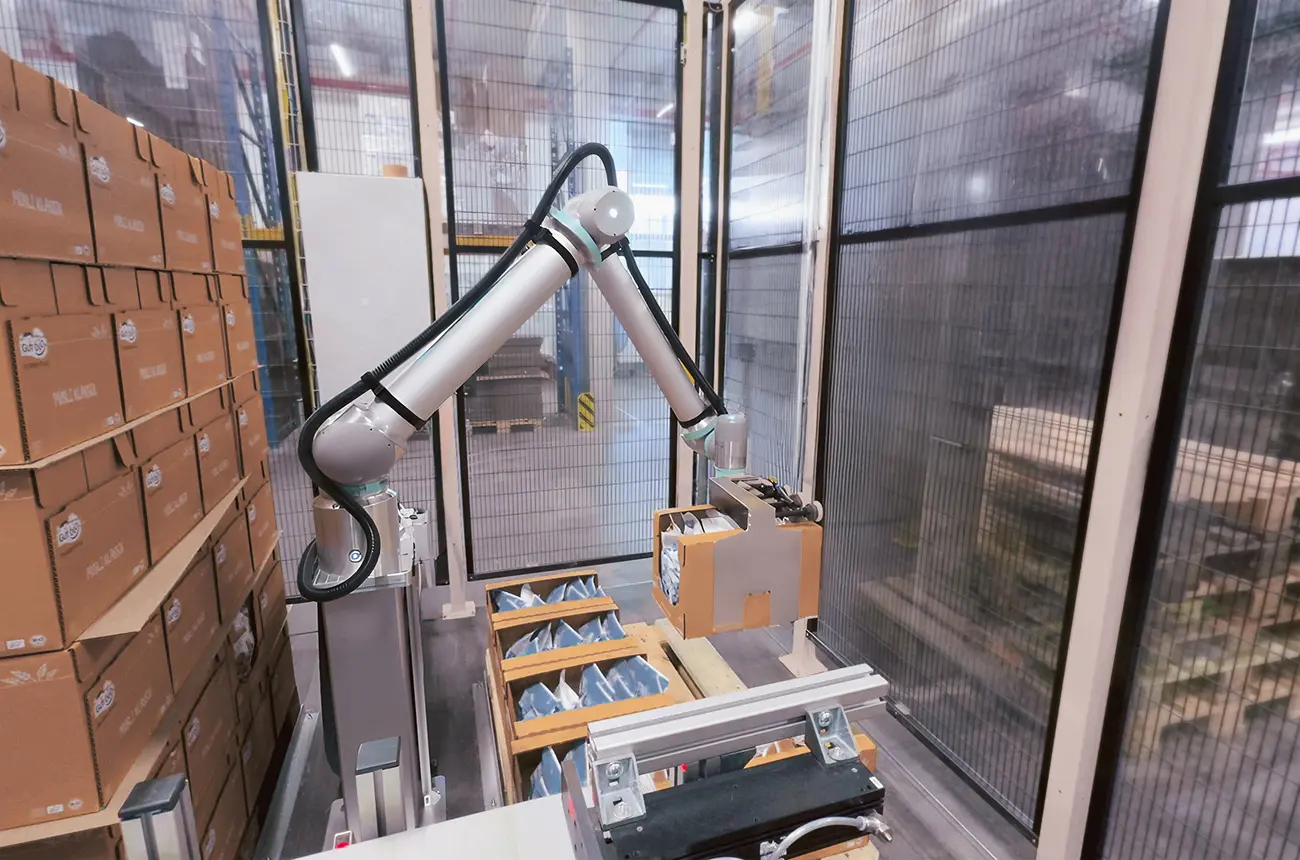
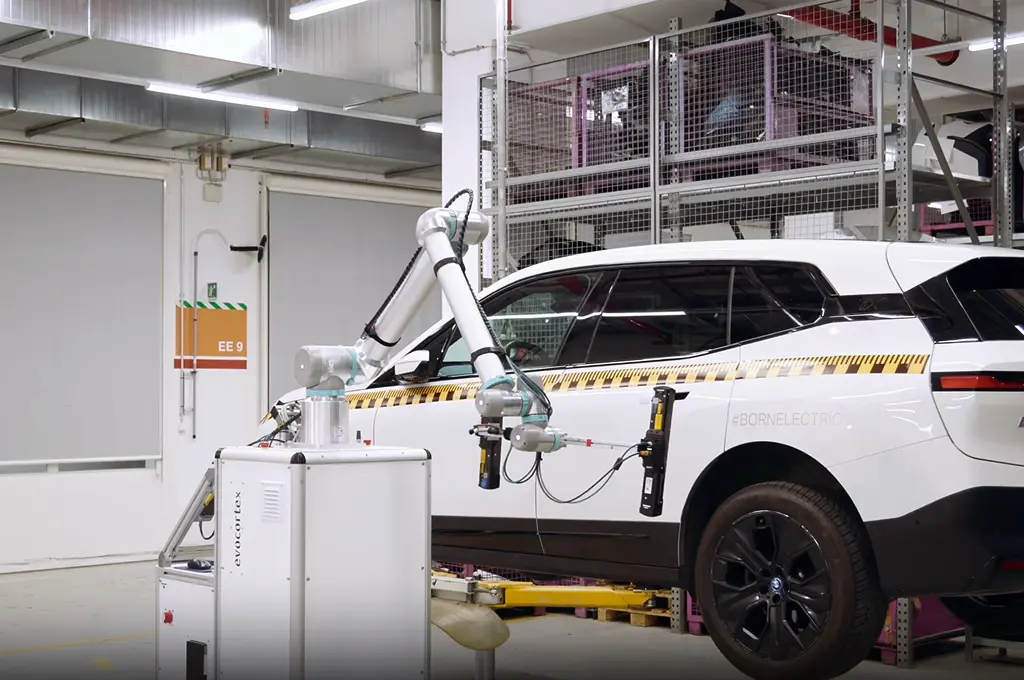
Our Autonomous Industrial Robotics offer practical manufacturing automation systems for key application areas in the manufacturing industry.

%202.webp)
Advantages
The advantages of automated production at a glance
Financial Flexibility
Our Robotics-as-a-Service (RaaS) model lets you adopt automation incrementally and prove value quickly with zero upfront investment.
Greater efficiency
Optimized production processes eliminate manual intervention and streamline your daily operations.
Capacity expansion
Scalable systems help you meet rising market demand and navigate ongoing cost pressures.
Productivity
Powered by Physical AI, we offer the world’s first modular robot to deliver end-to-end robotics that just works.
Increased quality
Standardized automation routines ensure consistent production outputs and minimize error rates.
Reduced Complexity
Streamlined task management automates manual operations while minimizing operational risk and deployment time.
Who It's For
Where Manufacturing Automation Pays Off Most
Manufacturing automation isn't just for large corporations. RobCo's robots are modular and rented as a service, so small and mid-sized manufacturers can reach a smart factory setup without a seven-figure budget. That is where the benefits of manufacturing automation compound: quality and efficiency without heavy capital.
It fits high-mix, low-volume production, and plants that struggle to fill shifts or need consistent output under cost pressure. It pays off across industries, from robotics manufacturing plants to food and beverage lines. Automotive suppliers use manufacturing robotics for welding and machine tending; food and beverage plants automate palletizing. Metal and plastics processors rely on flexible manufacturing for small batches, and electronics makers use assembly robots for precise, repeatable placement.
Getting Started
Starting a Manufacturing Automation Project, Step by Step
Start small and prove value before you scale. Many manufacturers worry automation means a completely new production concept, but RobCo builds on existing infrastructure for a structured, incremental transition. A practical path to automation in production looks like this:
Run a potential audit
We identify which tasks are most practical to automate first, often the ones that are repetitive or hard to staff.
Build a digital twin
We simulate the workflow in RobFlow, our no-code manufacturing automation software, before installation to minimize deployment risk.
Retrofit what you have
Our modular robots connect to your existing legacy machines via smart sensors, avoiding the need for total line replacement.
Manage the fleet
Your team can use RobCo Studio to control, simulate and monitor robots easily, ensuring smooth and fast deployment.
Modular hardware lets you skip a full automated production line replacement and keep producing during rollout. Operators shift from manual labor to supervising the robots after short training.
Outlook
The Future of Automation in Manufacturing
94%
of automation users see digital solutions as important to their future automation efforts. Source: McKinsey
The direction is clear. McKinsey reports that 94% of automation users see digital solutions as important to their future automation efforts. It expects a shift toward software-defined, autonomous manufacturing within the next 5 to 15 years. Labor shortages and cost pressure are speeding that up. As automation and manufacturing continue to converge, companies that start small tend to scale fastest.
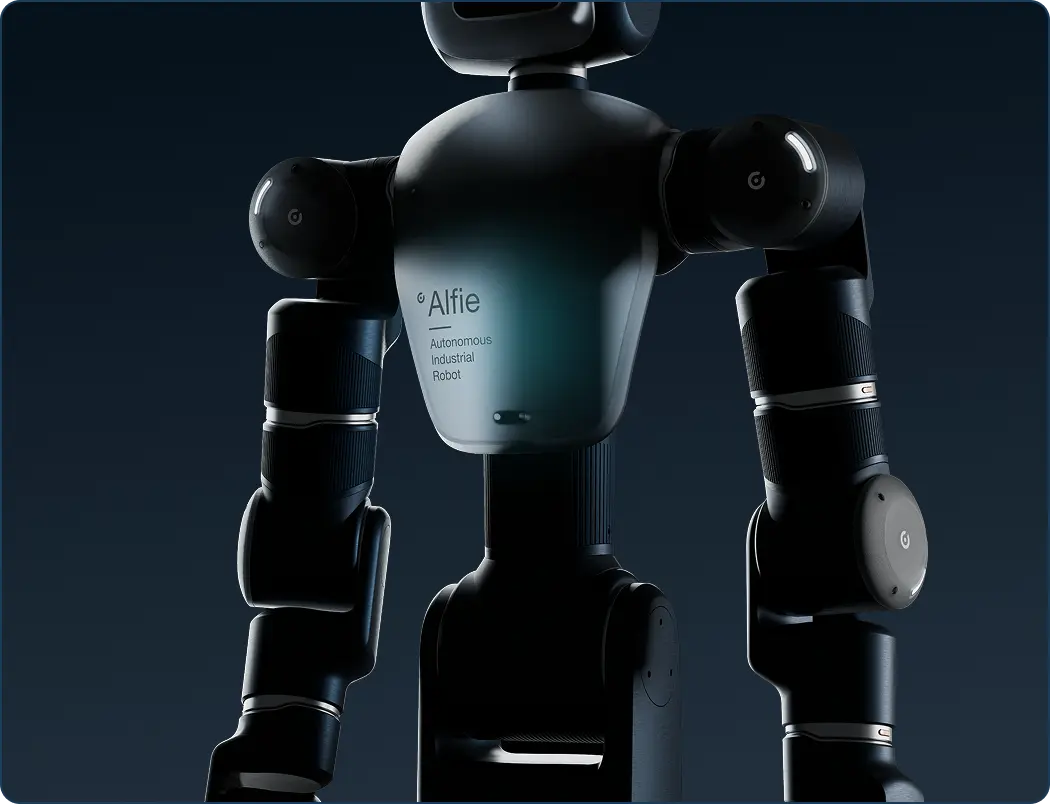
Automation has moved beyond isolated machines toward connected, self-learning systems - a clear marker of manufacturing automation's shift toward full autonomy. This shift toward robotic manufacturing automation is already reshaping how plants staff their lines. It is where the future of automation in manufacturing sits. RobCo's Autonomous Industrial Robotics points that way: modular robots that adapt through Physical AI instead of fixed programming.
Proven in Production
Manufacturing Automation in the Real World
Hundreds of RobCo robots are already deployed across Europe and the US - in industries from automotive and electronics to food & beverage and logistics. Customers report higher productivity, more stable processes, and fast ROI thanks to our Robotics-as-a-Service model.










Frequently Asked Questions

It’s the integration of modular robotic hardware and Physical AI to execute tasks with minimal human intervention. RobCo is redefining industrial automation with Autonomous Industrial Robotics. They solve real-world production challenges such as inconsistent throughput and high waste, letting manufacturers scale quickly without full production line replacement.
The four types of automation include fixed automation, programmable automation, flexible automation, and integrated automation. The future is Autonomous Industrial Robotics that uses the IoT to connect modular hardware with Physical AI, allowing for easy scaling as operational pressures increase.
No, digitalization describes technological change in general, while Industry 4.0 focuses on smart, networked technologies in manufacturing and production environments. Autonomous Industrial Robotics in Industry 4.0 combines modular hardware, Physical AI, and IoT to revolutionize industrial processes and respond to rising cost and labor pressures.
Automated systems from RobCo are highly flexible thanks to modular hardware powered by Physical AI that can be easily adapted to new requirements. Bringing this type of smart automation into your manufacturing environment allows you to enable efficient product variations and minimize the risk of long changeover times.
Start with repetitive, high-volume or hard-to-staff tasks such as machine loading, palletizing and material handling; these deliver fast, measurable returns and carry low integration risk. Once a pilot proves out, assembly automation and more complex production steps can follow, extending automation further down the line.
With RobCo's Robotics-as-a-Service model, there's zero upfront investment; you pay a predictable monthly rate and only add the modules you need. Automated manufacturing often pays off within months, not the multi-year payback many manufacturers expect, because you're renting proven hardware instead of buying and integrating it yourself.
The main risks in the automation of production are automating the wrong process first, over-scoping the deployment, and disrupting live production during rollout. RobCo lowers them with simulation, pilot projects and brownfield integration into existing machines. A single production robot can prove value before you commit to scaling further.
Manufacturing automation relies on several connected technologies. Programmable logic controllers (PLCs) and SCADA systems control and monitor machines, a manufacturing execution system (MES) coordinates the shop floor, and robots with machine vision do the work. Automated guided vehicles (AGVs) move material between stations.
No. Robotic process automation (RPA) uses software bots to automate digital tasks such as data entry and order processing. Manufacturing automation automates the physical production line with robots and machines. RobCo focuses on the physical side, and the two can complement each other.
With modular robots, manufacturing companies create a future-proof basis for sustainable growth, greater efficiency and maximum flexibility.
Whether you are in the automotive, food, or metal industry, our Autonomous Industrial Robots are built to handle increasing operational pressures and scale with you.